News Alert: Beware of Fraudsters Targeting Immigrants as Scams Surge Nationwide
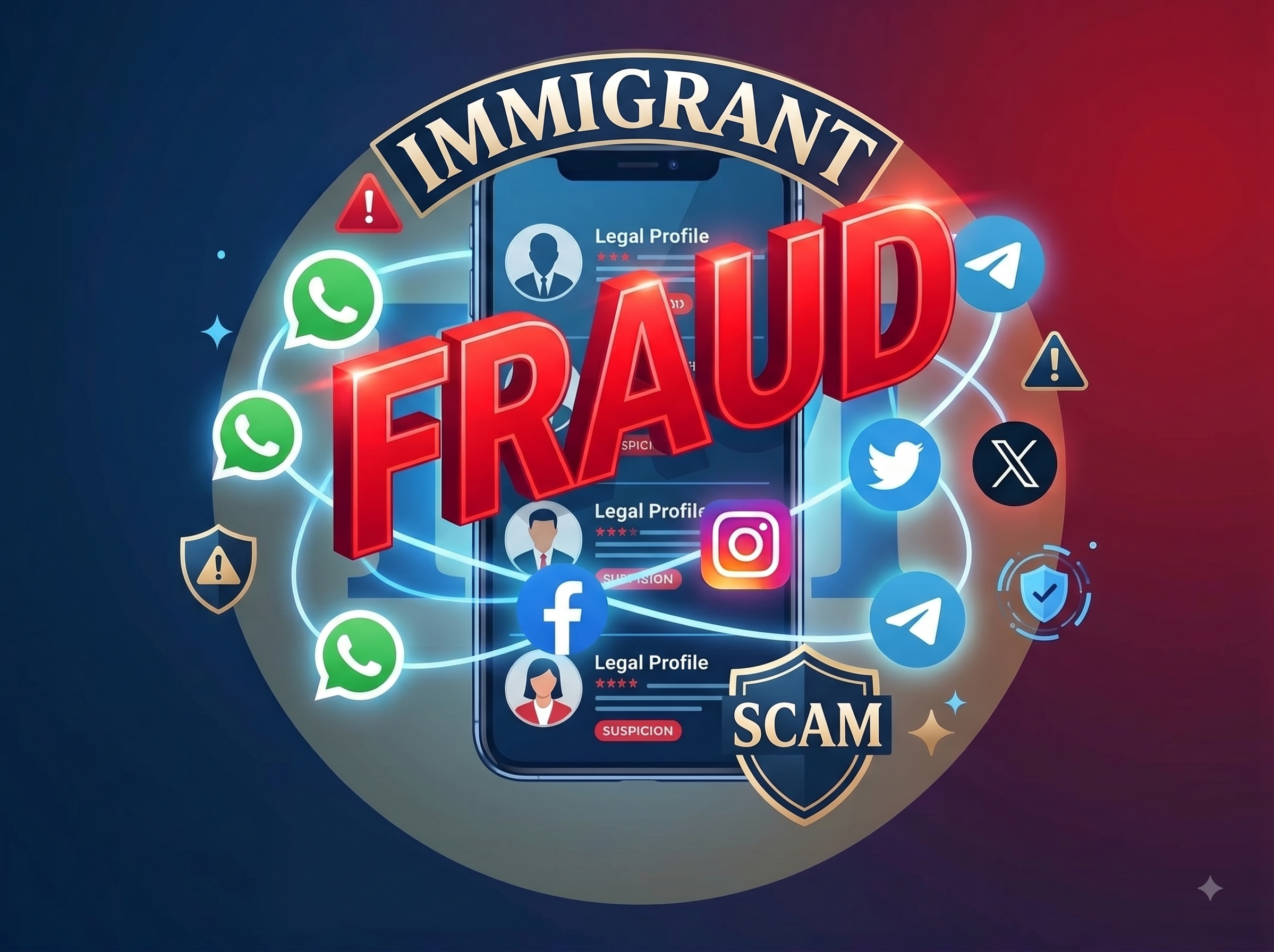
Image generated by Gemini. In recent months, immigration lawyers, Department of Justice (DOJ)-accredited representatives, and legal aid organizations across the United States have seen a sharp surge in sophisticated, highly coordinated impersonation scams targeting immigrant communities. Find out how to protect yourself in our News Alert.
According to the American Immigration Lawyers Association (AILA), in recent months, immigration lawyers, Department of Justice (DOJ)-accredited representatives, and legal aid organizations across the United States have seen a sharp surge in sophisticated, highly coordinated impersonation scams targeting immigrant communities.
Exploiting the fear, urgency, and vulnerability of families navigating complex legal processes, bad actors are using sophisticated digital tools to pose as trusted attorneys, law firms, and nonprofit legal organizations.
Understanding how these fraudsters operate, recognizing the red flags, and knowing where to turn for legitimate legal help can protect families from losing thousands of dollars—and safeguard their legal status in the United States.
How Modern Scammers Operate: The Rise of Digital Impersonation
While unauthorized practice of law (often referred to as notario fraud) has existed for decades, recent bad actors have elevated these tactics using digital marketing and social media platforms.
1. Social Media & Messaging Apps
Scammers frequently operate on Facebook, Instagram, and WhatsApp. They run paid advertisements, set up official-looking business profiles, build thousands of fake followers, and display stolen photos or logos of real licensed attorneys and reputable organizations. In fact, major organizations like Catholic Charities USA have reported that roughly one-third of their nationwide agencies have encountered fraudulent activity involving scammers misusing their names or branding.
2. Targeting Families in Crisis (The ICE Bond Scam)
One of the most predatory schemes involves monitoring or obtaining information about individuals recently detained by ICE. Scammers contact frantic family members, impersonate legitimate attorneys (or law firm representatives), and falsely claim that an immigration court bond has been approved. They demand immediate payments—ranging from $5,000 to over $30,000—promising the immediate release of their loved one.
3. Official-Looking Documentation & Alias Banking
To appear authentic, scammers generate official-looking graphics and flyers (e.g., using official seals or headers like "Pago Seguro USCIS"). They instruct victims to wire money, send bank transfers, or make deposits directly into bank accounts. Once payment goes through, the imposter cuts off all communication.
4. Fake Virtual Court Hearings & Guaranteed Approvals
In extreme cases, scammers have staged fake virtual "court hearings" where co-conspirators impersonate immigration judges or government officials, deliver fake rulings, and demand additional money. Others promise guaranteed work permits, green cards, or fast-track approvals that do not exist under current law.
Critical Differences: Notario vs. U.S. Notary Public
A major point of confusion for many immigrants from Latin America is the title of "Notario":
In Latin America: A Notario Público is a highly trained legal professional with significant authority, similar to a attorney.
In the United States: A Notary Public is only authorized to verify identity, witness signatures, and administer oaths. A U.S. notary public cannot give legal advice, fill out immigration forms, or represent anyone in court or before USCIS, unless they’re also a lawyer, a DOJ-accredited representative or their associates.
Red Flags & Warning Signs of an Immigration Scam
Be alert if anyone offering immigration services does any of the following:
Demands payment via WhatsApp, Zelle, wire transfer, or direct deposit to a personal bank account.
Communicates exclusively through social media or messaging apps without a verifiable physical office or official firm domain.
Claims government agencies (USCIS, ICE, or EOIR) contact applicants via WhatsApp or phone to demand money. (U.S. government agencies do not demand payments or send official court rulings through text messages or WhatsApp).
Guarantees a specific result, fast-track processing, or a "secret" legal pathway.
Refuses to provide a written, signed retainer agreement (contract) or official itemized receipts for payments.
Refuses to give you complete copies of applications or filings submitted in your name.
How to Protect Yourself and Verify Legitimate Legal Help
Before hiring anyone or paying money for immigration assistance, take the following protective steps:
Independent Verification: Do not rely solely on a phone number, business card, or social media profile given to you. Search for the attorney or organization independently using trusted directories.
Check Bar Standing & Licensing: Verify that the attorney is licensed and in good standing with their state bar association or listed on the DOJ Executive Office for Immigration Review (EOIR) list of accredited representatives.
Use Reliable Legal Directories:
Always Get Documentation: Never make a payment without receiving a signed client agreement (retainer), a detailed invoice, and an official receipt. Keep copies of every document filed on your behalf.
What to Do If You or Someone You Know Has Been Scammed
If you have fallen victim to an immigration scammer:
Gather and Preserve All Evidence: Save all text messages, WhatsApp chat logs, phone numbers, social media posts, payment receipts, wire transfer confirmations, and bank details.
Consult a Legitimate Immigration Attorney Immediately: Fake or fraudulent filings submitted to USCIS or the immigration court can cause severe damage to your case, including deportation proceedings. An attorney can conduct emergency case triage and help submit corrective filings.
Report the Fraud to Authorities:
Federal Trade Commission (FTC): ReportFraud.ftc.gov
USCIS Online Scam Reporting Form: uscis.gov/scams
EOIR Fraud and Abuse Prevention Program: justice.gov/eoir/fraud-and-abuse-prevention-program
State Attorney General & Local District Attorney Offices: File a complaint with your state's Consumer Protection or Hate Crimes/Fraud Bureau.
Download AILA’S anti-fraud flyer in ENGLISH | SPANISH | ARABIC | CHINESE | FRENCH | TAGALOG | VIETNAMESE
Protecting your family from immigration fraud requires vigilance, independent verification, and trusted legal guidance. By staying informed about common impersonation tactics, securing proper documentation, and reporting suspicious activity immediately, you can help safeguard your legal journey and prevent deceptive bad actors from exploiting vulnerable communities. Please contact us to set up a consultation if you require legal assistance. Follow us on Instagram, Twitter, Facebook, LinkedIn, Tumblr and TikTok, for up-to-date immigration news.
Torregoza Legal PLLC is the law firm for immigrants, by immigrants. We are founded on the motto of LegalEase: we do away with the legal jargon and make law easy to understand, so you can focus on what’s important to you – going for your American Dream.
Contact us at (888) 445-7066 orinfo@legalease.us. Find us on social media as @LegalEaseUS. || http://legalease.us/
This website and blog constitute attorney advertising. Do not consider anything on this website or blog legal advice as the law is dynamic, particularly in the immigration field and nothing in this website constitutes an attorney-client relationship being formed. Set up a one-hour consultation with us before acting on anything you read here. Past results are no guarantee of future results and prior results do not imply or predict future results. Each case is different and must be judged on its own merits.